
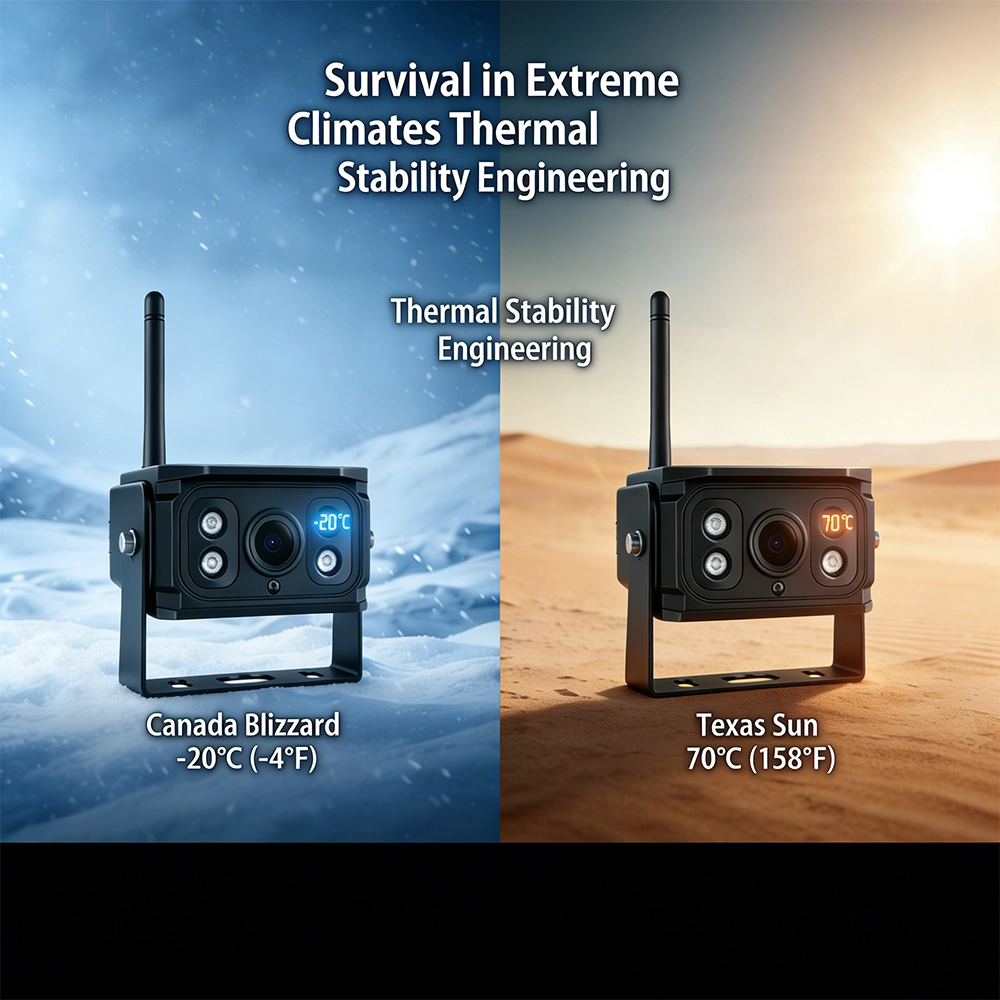
Why Your Fleet Needs IP69K Certified Cameras
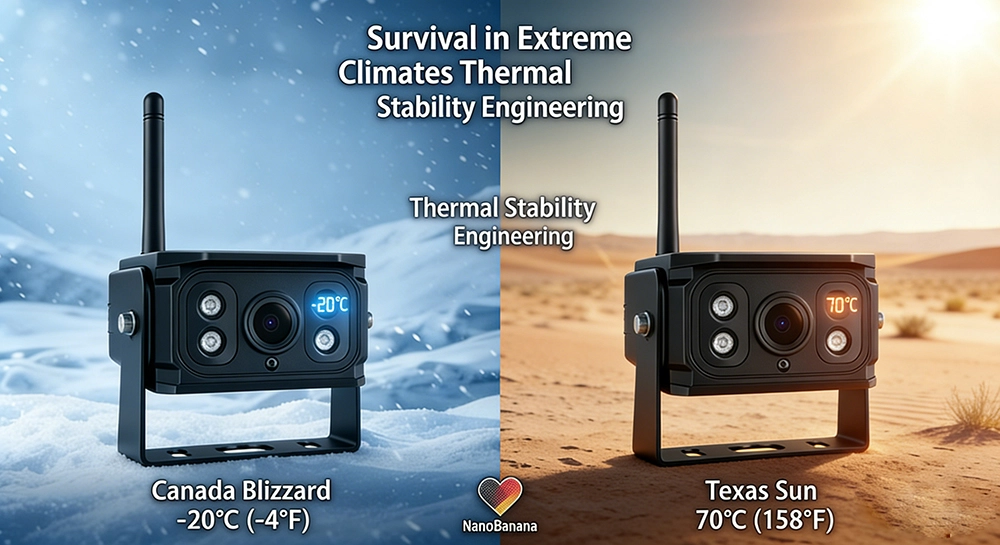
When it comes to commercial vehicles—trucks, trailers, and heavy machinery—standard electronics simply don’t survive. In the world of fleet safety, there is one rating that separates professional equipment from consumer-grade toys: IP69K.
At TOPOPFIRES, we design our systems to thrive where others fail. Here is why the IP69K rating is the non-negotiable gold standard for your business.
The Engineering Behind the Rating – High Pressure & Extreme Temps
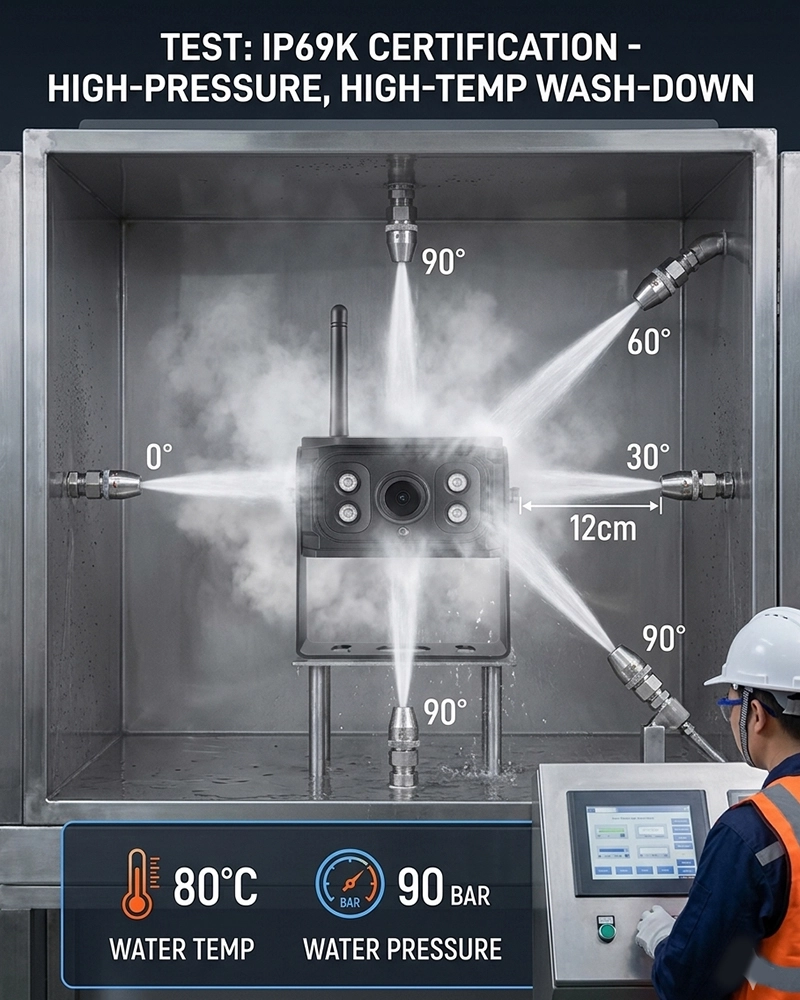
Most people are familiar with “IP67” (submersible in water), but IP69K is a different beast entirely. It was originally developed for industries where equipment must be frequently sanitized with high-pressure, high-temperature wash-downs.
The High-Pressure Test
To earn an IP69K rating, our cameras must withstand a brutal “torture test”:
Water Pressure: 80–100 bar (up to 1450 PSI).
Water Temperature: 80°C (176°F).
The Process: High-pressure jets are sprayed at the camera from four different angles (0°, 30°, 60°, and 90°) at a distance of only 10-15cm.
Real-World Solutions – From Blind Spots to Seamless Operations
Technical specs mean nothing if they don’t solve your daily headaches. Here is how TOPOPFIRES transforms your fleet’s safety and efficiency.
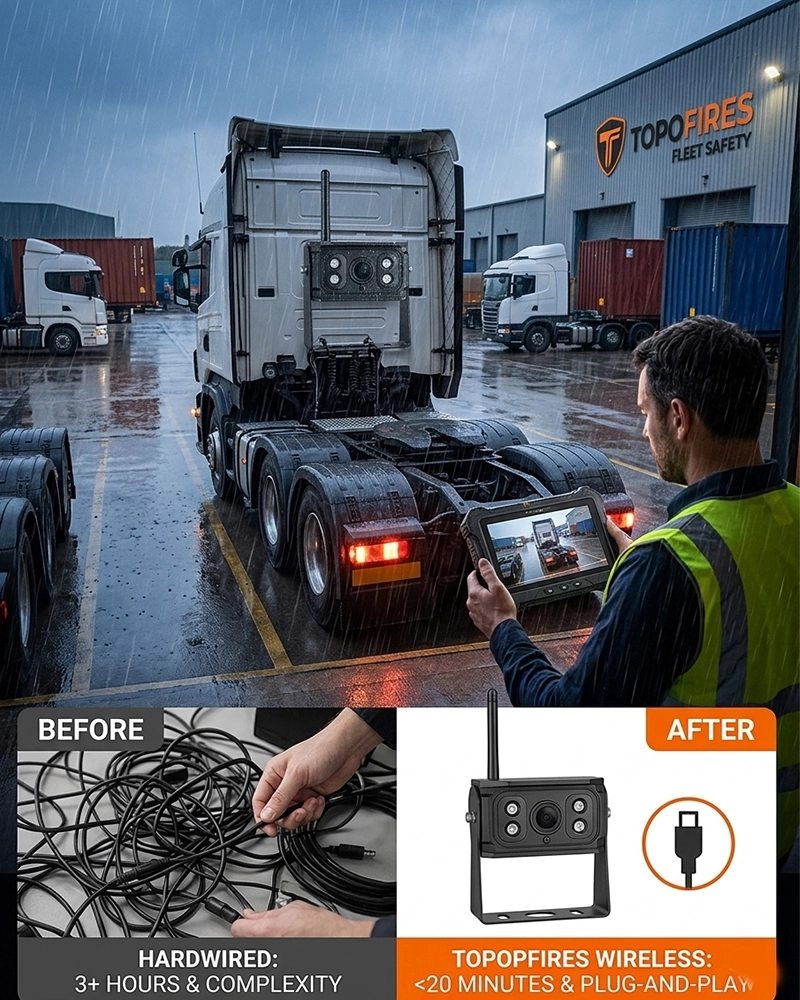
The Pain Point: Installation Complexity & Signal Loss
Traditional wired systems require hours of drilling and threading cables through the entire chassis. Furthermore, standard wireless cameras often suffer from “signal lag” or interference when the truck passes near power lines or other electronics.
The TOPOPFIRES Solution: Digital Wireless Stability
Our latest wireless camera (pictured above) features a high-gain antenna and Digital Signal Transmission. It creates a dedicated, encrypted link to the monitor that penetrates metal and ignores interference.

Add comment